From requirements to a documented prototype
CAD, PCB, firmware and prototypes
I can take a concrete need through the full chain: clarification, a fast working proof, electronic schematic and PCB, fabrication files, an editable enclosure, firmware, local web or MQTT control, documentation and agreed verification.
Designed with OpenAI Codex. Codex is used as a development and verification tool. Responsibility, source review, test boundaries and decisions still remain explicit.
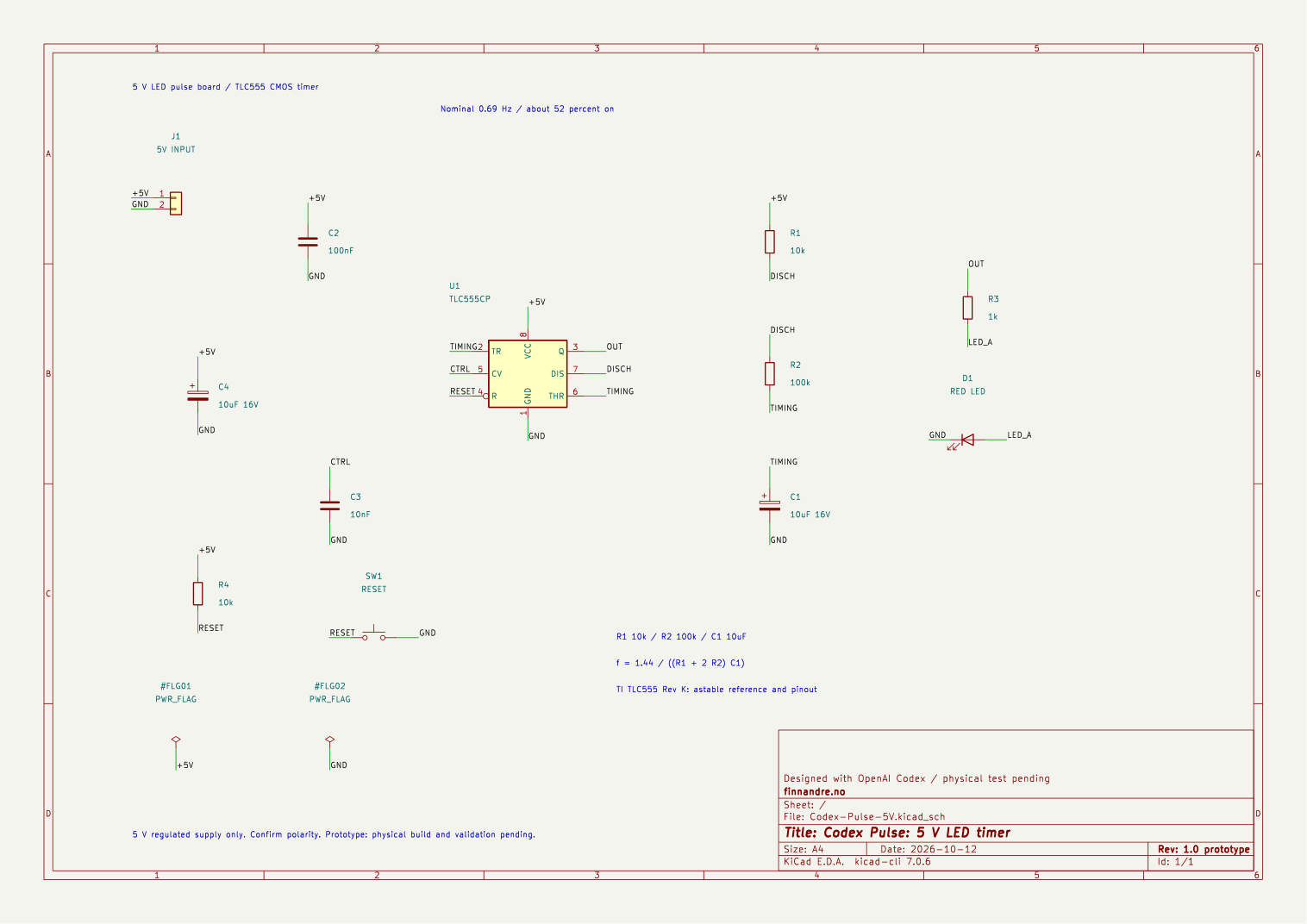
Schematic, PCB, BOM, netlist, Gerbers and drill files for further engineering and fabrication review.
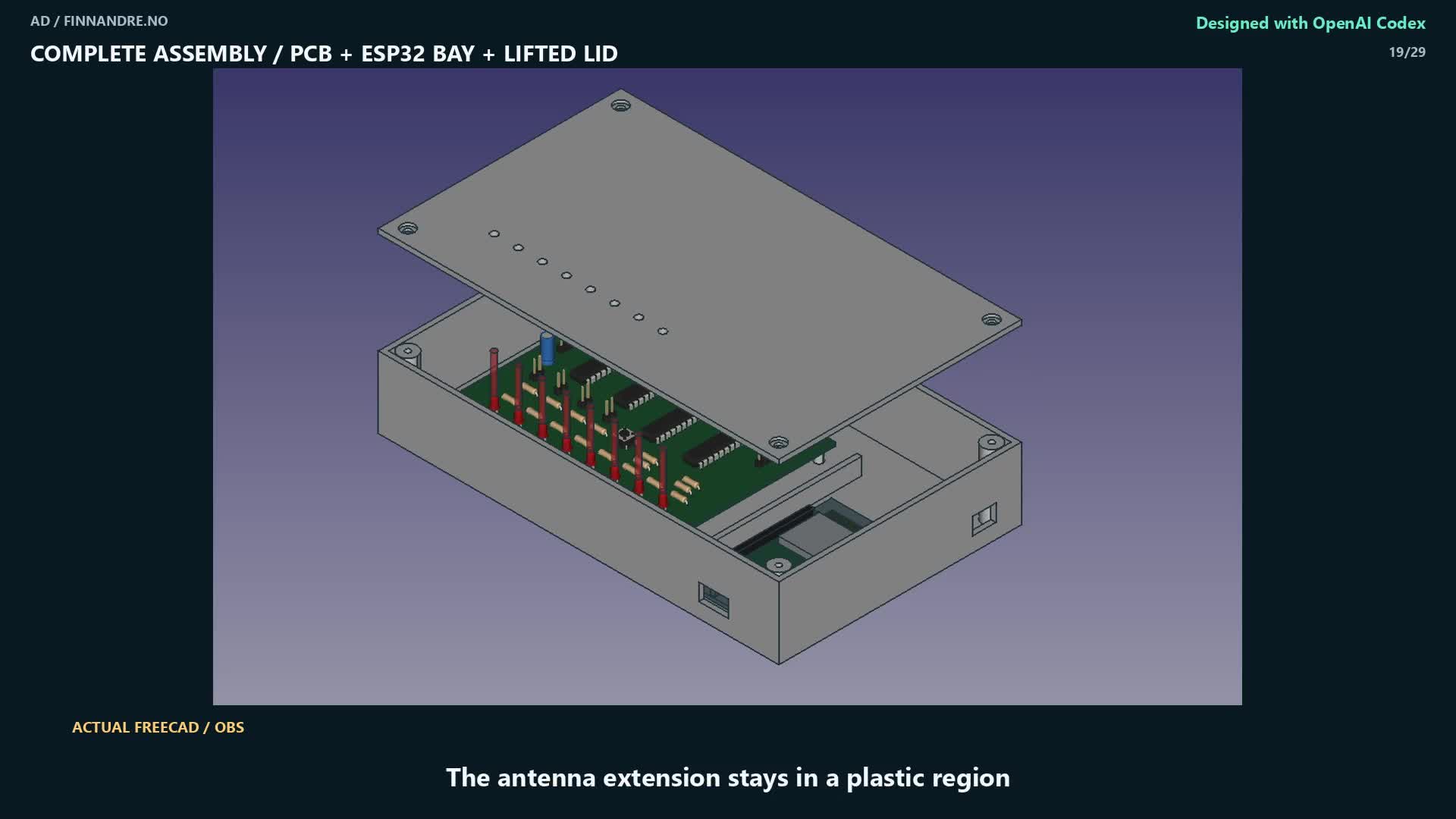
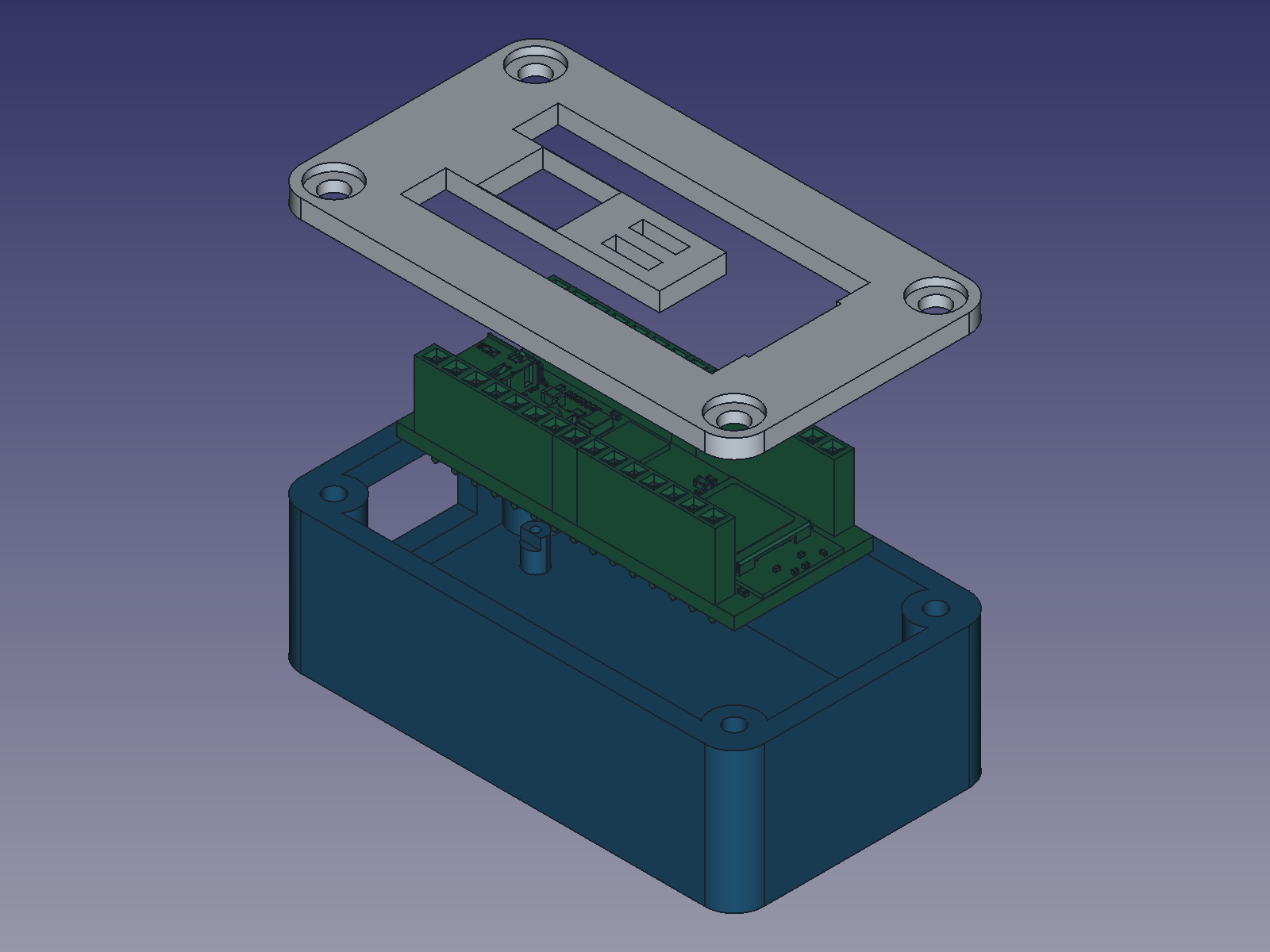
Native editable FreeCAD models, STEP and STL for an enclosure, placement and prototyping.
Firmware example, control protocol, local web UI, MQTT integration and documented handover.
One connected assignment
From an idea to work that can be inspected, tested and extended
- Requirements and scope. Function, interfaces, environment, physical space, responsibility and completion criteria become explicit.
- Fast proof. A simulation or bounded demonstration checks the direction before more work is tied up in detail.
- Native deliverables. Schematic, PCB, 3D, code and exports are built in tools that can be opened and changed later.
- Verification and handover. What was tested, not tested and remains unknown travels with the next physical step.
Scope and price are agreed after the need, hardware, deliverables and verification responsibility are understood. I do not describe hardware as production ready before the necessary physical checks have actually been completed.
Open example · 13 October 2026
Address selection, eight LED outputs, enclosure and MQTT web control
The newest demonstration joins two 74HCT164 shift registers, a 74HCT688 address comparator, a 74HCT273 output latch, eight low-current LEDs and address jumpers for 1, 2, 4 and 8. It includes editable KiCad schematic and PCB files, BOM, netlist, Gerbers and drills, STEP, native FreeCAD assembly and enclosure, STL, an ESP32 example and a local web demo using a real loopback MQTT broker with two clients.
What was observed
- KiCad DRC: 0 violations, 0 unconnected pads and 0 footprint errors.
- 65,536 ideal protocol frames passed the machine model.
- The FreeCAD geometry reopened and passed the documented geometry checks.
- A local MQTT broker, two clients and the web interface exchanged simulated state and commands.
What still needs proof
- The ESP32 firmware has not been compiled or flashed to physical hardware.
- GPIO and electrical load are simulated; ERC and component review remain.
- Assembly, fit, electrical, thermal and RF behaviour have not been physically tested.
- No PCB has been ordered. Gerbers require fabrication review before any order.
The film’s 600 seconds describe its duration only. This is not a claim about total development time.
Discovery as part of delivery
SEO, AEO, GEO and AI visibility supported by real sources
When rights and customer boundaries allow, a technical project can also receive a public, understandable presentation. SEO means useful crawlable pages, accurate titles and descriptions, canonical and language links, internal links and structured data. AEO means visible, direct answers to questions people actually ask. GEO and AI visibility mean consistent facts, clear entities, dated sources and attributable technical evidence.
This is not a factory for fake references. We do not invent customers, tests, outcomes, reviews or authority. When a project cannot be shown publicly, private delivery remains separate from the evidence that can safely be published. Nobody can guarantee rankings, indexing or that an AI service will choose to cite a page.
Questions and answers
Can one assignment include PCB, enclosure, firmware and web control?
Yes. That is the value of a connected workflow. The exact deliverables and checks are agreed after the need and hardware are understood.
Does a clean DRC mean the hardware is production ready?
No. DRC is one software check. ERC, datasheet and component review, assembly, and physical electrical, thermal and RF testing may still be required.
Can you send Gerbers directly to PCBWay or another manufacturer?
Fabrication files can be prepared, but fabrication review, actual component choice, manufacturer rules and order responsibility must be agreed before ordering. This open demo has not been ordered.
Does SEO, AEO or GEO guarantee rankings or AI citations?
No. We can make the content technically accessible, understandable and inspectable. Search engines and AI services decide whether and how it is presented.